
Electrophysiology (EP)
Helping Your Heart Get Into the Right Rhythm
Have you ever felt like your heart’s rhythm is unusual, like it’s beating either too fast or too slow? If so, your heart’s electrical system may be experiencing a problem called arrhythmia, or also known as irregular heartbeat. This heart issue may take a toll on your health and your day-to-day activities, from simply making you feel weak to causing a total heart failure.
The good news is, Abrazo Health has an experienced team who specializes in electrophysiology, a kind of test that doctors perform to help diagnose and treat different types of arrhythmia. Combining expertise and advanced technology, our cardiac electrophysiologists’ goal is to help your heart and life get back to the right rhythm as early as possible. At Abrazo Health, your heart is in the right place.
Find a Cardiologist Call for a Referral (866) 631-6569

How Serious Is Heart Arrhythmia?
Arrhythmia may be caused by changes in the electrical signals that affect your heartbeat or some changes in your heart tissue and activity. It may also happen because of stress, blood imbalances, medicines or the cause may be unknown. If you’re living with arrhythmia, please work closely with your doctor for a treatment plan. This may help keep you from experiencing irregular heartbeat again or prevent it from getting worse.
Some of the most common heart arrhythmia symptoms include but are not limited to:
- Palpitations, rapid heartbeat or pounding in the chest
- Weakness or fatigue
- Low blood pressure
- Dizziness or lightheadedness
- Fainting or near-fainting experiences
- Shortness of breath
- Anxiety
- Chest pain or pressure
At its worst, heart arrhythmia may lead to collapsing or a sudden cardiac arrest.
When left untreated, arrhythmia may keep the heart from pumping enough blood to the body which may eventually damage the brain, the heart and other organs to the point of becoming life-threatening. Arrhythmia may also increase your risk for stroke and heart failure.
A cardiac electrophysiologist, also known as a cardiac EP, is a doctor who specializes in treating heart rhythm issues. They perform tests to determine the electrical activity of a patient’s heart to diagnose arrhythmia, determine its cause and provide suitable treatment options.
At Abrazo Health, our electrophysiologists perform the following:
- Evaluation and treatment of atrial fibrillation and other types of arrhythmia
- Management of antiarrhythmic medications
- Electrophysiology studies
- Catheter ablation
- Implantation and management of pacemakers and implantable cardioverter-defibrillators (ICD)
- Intracardiac echocardiograms
WATCHMAN™ Left Atrial Appendage Closure Device
What can cause a sudden stroke? Something as simple as a blood clot traveling through your bloodstream to your brain.
Now, imagine a device as small as a quarter working to keep
that from happening.
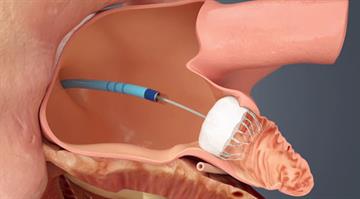 It’s called the WATCHMAN™,
a permanent implant that may help people diagnosed with atrial fibrillation – an irregular heartbeat that can cause blood to collect and may cause a blood clot.
It’s called the WATCHMAN™,
a permanent implant that may help people diagnosed with atrial fibrillation – an irregular heartbeat that can cause blood to collect and may cause a blood clot.
If you have AFib, you are not alone. Some 2.7 million people in the United States also suffer from this disease - the most common form of irregular heart rhythm. The facts of having AFib are sobering: You are five times more likely to suffer a stroke than someone with a regular heartbeat, according to the American Stroke Association.
But with the WATCHMAN™ in place, not only can it help prevent a stroke it may offer you an alternative to taking blood thinners.
It requires a minimally invasive surgical procedure. Your doctor will insert the device into your heart via a catheter through a vein in your upper leg, similar to a stent procedure.
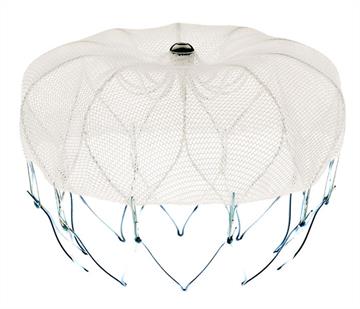 Once inside your heart’s left atrial
appendage, it opens up like an umbrella to block blood clots from entering your bloodstream.
Once inside your heart’s left atrial
appendage, it opens up like an umbrella to block blood clots from entering your bloodstream.
Following the procedure, patients typically need to stay in the hospital for 24 hours.
Your dedicated healthcare team at Abrazo Health will work with you to evaluate whether a non-drug alternative to blood thinners, such as the WATCHMAN™, makes sense for you. Together, you will develop an individualized treatment plan that embraces your medical history, risk factors and personal preferences.
Abrazo Arizona Heart Hospital is a national leader in the use of the WATCHMAN™ closure device and has been ranked among the top sites for the number of devices implanted. That’s because our team of skilled physicians have been working with the device for several years, including during the clinical studies leading up to U.S. Food and Drug Administration approval.
Expert Care With A Personal Touch
At Abrazo Arizona Heart Hospital and Abrazo Arrowhead Campus, we take a patient-centered, collaborative approach to provide the best outcomes. Our unique care includes assigning each patient a dedicated Nurse Navigator who is an acute care nurse practitioner. This means:
- Your Nurse Navigator will guide you through the entire care process, from scheduling appointments to providing education for the family.
- You will always see a familiar face and can reach your Nurse Navigator.
- Your Nurse Navigator will provide continuity of care after your procedure, with follow ups at 30 days and also one year.
What Is an Electrophysiology Procedure?
An electrophysiology procedure is a kind of test or study that observes the electrical activity of the heart. This procedure can help cardiac electrophysiologists understand the cause of a patient’s irregular heartbeat, as well as determine the best treatment options for the patient, whether it’s medicine, a cardiac catheter ablation, surgery, a pacemaker or an ICD.
Here are the things you can expect if you’re advised by your doctor to undergo an electrophysiology study:
- At the start of the study, you’ll lie down on a bed and a nurse will begin an intravenous (IV) line into your arm or hand. This allows the nurse to administer drugs and fluids during the procedure. You’ll be given a sedative to help you relax and be connected to several monitors.
- Your groin will be shaved and cleansed with an antiseptic solution, and sterile drapes will cover you from your neck to your feet. A soft strap will be placed across your waist and arms to keep your hands from touching the sterile area.
- The electrophysiologist will numb the skin in your groin and insert several catheters into the vein beneath the skin. Those will sense the electrical activity in your heart and help the electrophysiologist evaluate your heart’s conduction.
- The electrophysiologist will use a pacemaker to deliver electrical impulses through one catheter to increase your heart rate. This means you’ll feel your heart beating either faster or stronger. The doctor and nurses may speak with you to ask about how you are feeling. If your arrhythmia gets triggered, you may be given medications. This way, the treatment team can determine whether the medicines would be effective and may be enough to control your irregular heartbeat. If necessary, a small amount of energy will be delivered by patches in your chest to bring back your normal heart rhythm.
- Based on the information collected, the doctor may perform an ablation or implant a pacemaker or ICD.
The entire procedure takes between two and four hours, or longer if additional treatments will be performed at the same time. After the procedure, you may be asked to rest for one to two hours. Then, follow-up appointments may be scheduled, discharge planners may come to you to explain the entire procedure and your doctor may also prescribe you with medications before going home.